
Building Brands
Performance Marketing Rents. Brand Owns. Here's the Long-Game Math.
Week 5 of the See What's Possible series.
When I look at the growth-stage companies that have broken through to real scale, the ones that didn't just hit a good quarter but actually built a durable advantage, they almost always share one thing.
They invested in the brand when their competitors were still buying clicks.
That's the whole long-game thesis. And it's the case I want to make in this final piece of the series. Because everything we've talked about over the last four weeks — the growth engine, attraction, engagement, conversion — all of it compounds, or it doesn't. And whether it does is the difference between a company that gets easier to grow every year and one that has to fight harder for every quarter.
The renter and the owner.
There's a useful way to think about every dollar you spend on growth. You're either renting it or owning it.
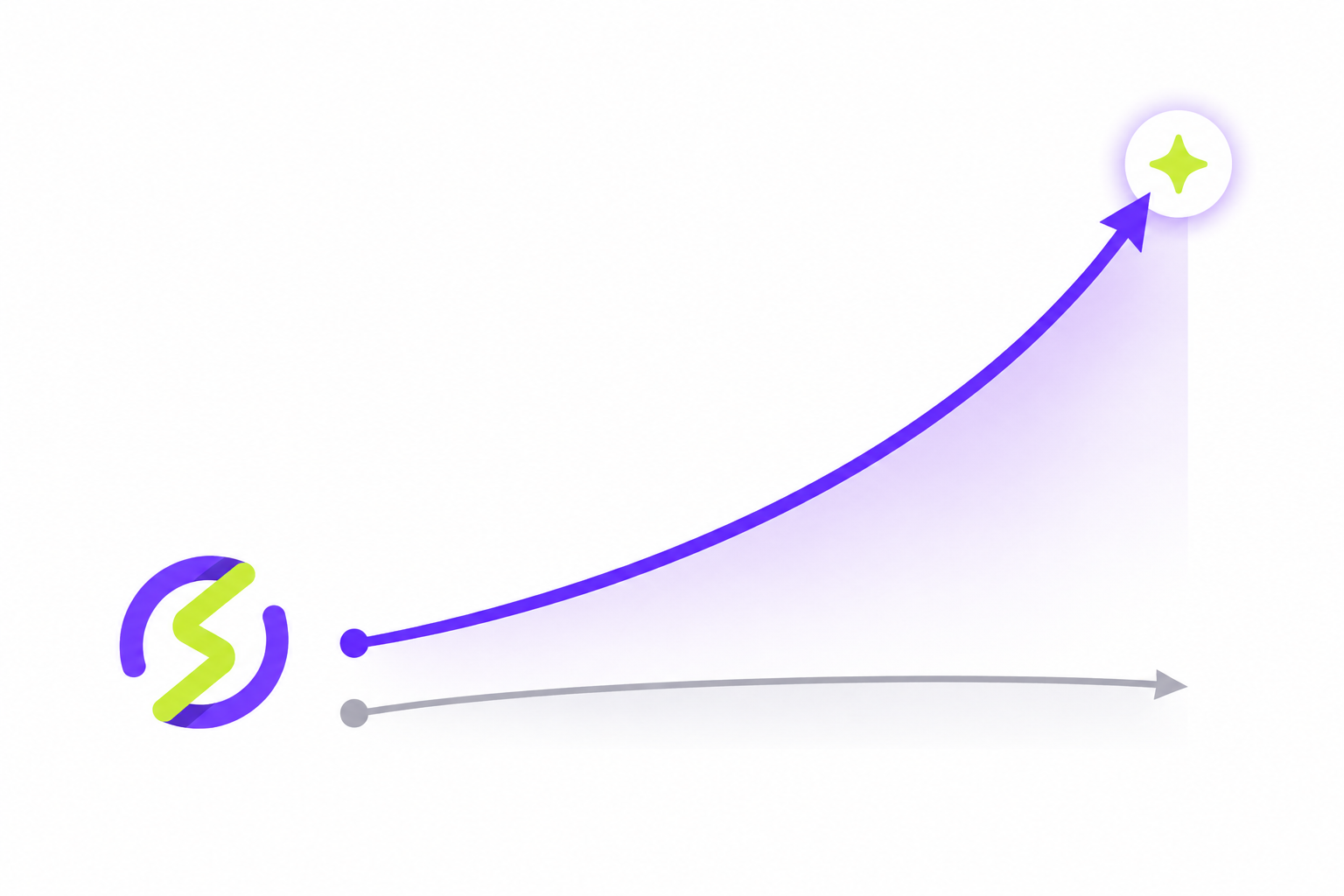
A rented dollar is paid media. You buy the click, you get the impression, you may convert the lead. The minute you stop paying, the click stops. Next quarter, you have to start over. The dollar didn't compound. It expired.
An owned dollar is a brand investment. Better positioning. A clearer story. A customer experience that turns buyers into advocates. The work you do this quarter is still working for you two years from now, and the work two years from now is built on top of it.
Both have their place. Smart companies use both. But the ratio matters enormously over time.
A company that's 90% rented and 10% owned looks fine on a one-year P&L. That same company looks completely different on a five-year P&L. The competitor who spent the same total but did it 50/50 has a brand asset that's now doing the work paid media used to do. Their cost of growth is lower. Their margins are better. Their team isn't running on a treadmill.
This is what people mean when they say brand is an asset. It's not a metaphor. It's a math problem about which dollars depreciate and which dollars accrue.
What "compounding" actually means.
The word 'compound' is used a lot in growth conversations. It's worth being specific about what it means in the context of your brand.
Compounding means each unit of effort works harder than the last one because the foundation under it is stronger.
When your brand has compounded over several years, here's what you get:
Paid media gets cheaper. Same ad spend, more efficient conversion, because the audience already has familiarity and trust with the brand. The brand is doing half the work the creative used to have to do.
Sales cycles get shorter. Prospects come into the conversation pre-warmed. They've been engaging with the brand for months before they raise their hand. The sales team isn't starting with "let me tell you who we are"; they're starting closer to "let me show you the fit."
Hiring gets easier. Strong brands attract better talent. The people you want to hire have already heard of you. The recruiting process gets faster because half the convincing has already happened.
New product launches land harder. When you launch into a brand customers already trust, you don't have to earn the right to be heard. The audience leans in. The first version of the product gets adopted by people who would have waited for v2 if they didn't already believe in you.
Referrals do more of the work. Engaged customers bring others. Word of mouth becomes a real channel instead of a vague hope.
None of these things is dramatic in any single quarter. All of them, taken together over the years, are the difference between two companies in the same market with the same product, yet with wildly different growth trajectories.
The companies that figured this out.
You can usually tell which companies played the long game by how they describe their own growth.
Companies that didn't compound talk about it in terms of campaigns. "We had a great Q3." "The new campaign performed." "We just hired a new VP of growth." Every win is event-driven. Every win has to be replaced next quarter with a new event.
Companies that compound talk about it in terms of momentum. "Our cost per acquisition has been trending down for two years." "Sales cycles have shortened across the board." "We're getting inbound from customers we didn't know were watching." The wins are systemic, not episodic. The brand is doing work in the background that the team doesn't always notice in real time, until they look at a five-year curve and see the line bending the right way.
That curve is the prize. It's not glamorous. It doesn't make headlines. It's just the math, working in your favor instead of against you, quarter after quarter.
The window matters.
Here's the part most founders and CEOs underestimate.
Compounding takes time to start, but it also has a window. The companies that win this game aren't the ones that eventually got serious about their brand. They're the ones who got serious about it before their category got crowded.
Once a category is crowded, the cost of being noticed goes up dramatically. Every voice is competing for the same attention. Paid media gets more expensive. Sales get harder. The brand work you should have done two years ago now costs three times as much and takes twice as long to pay back.
The window isn't forever. And it's easier to spot in hindsight than in the moment.
If you're a founder or CEO and you've been thinking, "we'll get to brand once we're bigger" or "we'll invest in this when we have more headroom," I'd push you to look honestly at the window in front of you. The companies that broke through almost never did it by waiting until the brand was convenient. They did it by treating the brand as a growth lever before they had to.
What to do this week.
Map your last twelve months of growth into two buckets.
Rented growth: paid media, paid search, paid social, paid placements, sponsored content. Every dollar that stops working the day you stop paying.
Owned growth: organic search traffic from content that still pulls, referrals from satisfied customers, inbound from people who'd been quietly engaging with the brand, retention you didn't have to fight for.
What's the ratio? And, more importantly, is it trending in the right direction?
If the rented number is growing faster than the owned one, you're getting better at renting attention. That's a real skill, and it has value. But it isn't compounding. And the cost will keep going up.
If the owned number is growing, even slowly, that's your compound. That's the asset that gets more valuable every quarter.
The question isn't whether to do both. You'll always do both. The question is whether you're building the second one fast enough that, three years from now, it's doing the heavy lifting.
Closing the loop.
Here's the through-line of this whole series.
Week one: your brand is a growth engine, not a cost center.
Week two: it shows up as attraction, whether the right customers reach toward you or whether you have to chase them.
Week three: it shows up as engagement, whether attention turns into loyalty, and loyalty turns into something that multiplies.
Week four: it shows up as conversion, whether brand, sales, and customer experience operate as one system or three disconnected ones.
Week five: it shows up as compound, whether your growth gets easier each year or whether you have to keep paying for it from scratch.
That's what we mean by See What's Possible. Not a slogan. The actual case for treating your brand the way every other lever in your business already gets treated: as something that has to perform.
If you've been reading along and any of this has felt close to home, I'd welcome a conversation. No pitch, no proposal, no deck. Just thirty minutes about where the growth is in your business and what your brand could be doing to unlock it. If we're a fit to work together, we'll keep talking. If not, you'll leave with a clearer picture of your next move.
That's the offer.
Pull up a chair. Book a growth conversation with Greg.
Greg Johnson is the co-founder of Orbital Socket, a brand strategy and design agency for companies that need strategic clarity and design direction without agency complexity. We bring 20+ years of cross-industry experience to solve positioning challenges and bring brands to life.
Let’s work together to build your brand. Call Greg at 704.931.3529, or email him at greg@orbitasocket.com.

Brand and Revenue Should Be One System. Here's What Happens When They Aren't.
Week 4 of the See What’s Possible series.
Here's a pattern I've watched play out in dozens of growth-stage companies.
The brand work is good. The strategy makes sense. The creative is on point. The team is proud of it. And then the company tries to ship it through a sales and customer-experience apparatus that wasn't built for what the brand is now promising, and the whole thing falls apart at the goal line.
That's not a brand problem. That's a system problem. And it's one of the most expensive failure modes in mid-market growth.
The Three Stories Problem
In most growth-stage companies, the brand story lives in one folder, the sales team works from a different one, and the customer experience tells a third version once the deal is closed. None of them is wrong on its own. But none of them is the same story.
A prospect encounters the brand on LinkedIn, sharp, ambitious, and future-focused. Then they get a sales call that sounds like a feature list. Then they become a customer, and the actual experience is just... operational. Functional. None of the magic the brand promised.
The result is a quiet erosion of trust at every handoff. The prospect lands a little less excited than they were before the sales call. The customer is a little less enthusiastic than they were when they signed. The advocate is a little less likely to send referrals than they would have been if the experience matched the promise.
Nothing is broken, exactly. But the compound never kicks in. The brand work doesn't pay back, because the system around it didn't change to receive it.
What "One System" Actually Means
When we work with a founder on this, we're not building a new brand and handing it over. We're rebuilding the system the brand lives in.
That means a brand strategy that's connected to sales enablement. Sales conversations that reinforce, and don't undercut, the brand's positioning. Onboarding and customer success that delivers on what the brand told the prospect they'd get. A measurement framework that watches for handoff erosion between stages.
When those things are aligned, conversion stops feeling like persuasion. The right customers self-select in. The wrong ones opt out earlier, before they cost you onboarding cycles. The sales team spends less energy explaining and more energy delivering. The customer success team inherits customers who came in pre-aligned instead of pre-confused.
That alignment is the unlock. Not the brand. The brand-revenue system.
What Changes When the System Works
A few things become measurable when this clicks.
Sales cycles get shorter. Once the brand has done the convincing, the sales conversation can focus on fit rather than foundation. Cycles compress because nobody's restarting the case from scratch.
Win rates go up. Not on every deal, but on the deals that fit. The wrong-fit customers self-select out. The right-fit ones come in already wanting to work with you.
Customer acquisition cost goes down. A growing portion of new business comes from referrals, organic discovery, and inbound interest from people who were paying attention before they raised their hand. That cost-of-growth number on the dashboard is starting to move in the right direction.
Customer lifetime value goes up. Customers who came in aligned stay longer, buy more, and bring others in with them.
None of these are brand metrics. They're business metrics. But the brand-revenue system is the lever that moves them.
The Mistake to Avoid
The most common mistake I see is treating brand and revenue as separate workstreams that occasionally collaborate.
Marketing builds the brand. Sales works the pipeline. Customer success owns the relationship after the deal. They share a Slack channel and meet monthly. And on paper, it all sounds fine.
In practice, it means every function is optimizing for its own metric. Marketing wants impressions. Sales wants closed deals. Customer success wants retention. None of them is looking at the system. Each handoff is a leak.
A growth engine that actually compounds requires the opposite. One owner of the system. One conversation about how the brand creates the conditions for conversion. One measurement framework that tracks the entire funnel, including the steps that occur before the prospect ever raises their hand.
That's the work that doesn't happen by accident. And it's usually the work nobody inside the company has time to lead, because everyone is heads-down running their own function.
What to do This Week
Pick a recent customer you wish were more engaged. Walk the path they took from first impression to today.
Where did the brand promise something, only for the next step not to deliver? Where did the sales experience contradict the marketing message? Where did onboarding feel like a different company than the one they thought they were buying from?
Each of those moments is a handoff leak. Each leak is growth you paid for and didn't keep. And each one is fixable, but only if someone is looking at the system end to end.
Next: Compound. Why the brands that win the long game don't outspend their competitors, they out-compound them.
Want to talk about what's leaking between your brand and your revenue? Book a growth conversation with Greg.
Greg Johnson is the co-founder of Orbital Socket, a brand strategy and design agency in Charlotte, NC. He and his wife, Carole, started the company eleven years ago with a mission to deliver world-class marketing, build an adventurous workplace, and create opportunities for young professionals of color in an industry that desperately needs more representation. If you’d like to get in touch with Greg, you can call him at 704.931.3529 or email him at greg@orbitasocket.com.
Attention Isn't Loyalty. Here's the Difference.
Week 3 of the See What's Possible series.
There's a question I've started asking founder CEOs in the first thirty minutes of every conversation.
"How much of your growth right now is paid?"
It's a sneaky question, because the honest answer often surprises the person answering it. They say a number, then pause, then revise it upward. Then a quarter goes by, and they realize it's even higher than they thought.
What they're discovering is the difference between attention and engagement. And it's the difference between a company that's growing and a company that's renting growth.
Attention is something you buy. Engagement is something you earn.
Attention is the easy part. Attention is what you get when you put money behind ads, sponsor a podcast, or land a press hit. You pay for the impressions. The impressions show up. Some of them convert. Some don't. The minute you stop paying, the impressions stop coming.
Engagement is the hard part. Engagement is what happens when a customer actively chooses to be in your world, opens your emails because they want to, follows you because they care what you say, mentions you in conversations you didn't start, and defends you when someone else complains.
Both have value. But they don't compound the same way.
Attention is a treadmill. The day you stop paying, the audience disappears. Engagement is an asset. The work you did two years ago is still paying back today, and the work you do today will be paying back two years from now.
The growth-stage companies that win the long game are the ones that figured this out early enough to start building engagement when their competitors were still buying clicks.
What real engagement looks like.
I'll give you a working definition. Engagement is when your brand has gravity in your customer's life.
Concretely, that looks like a few things.
It looks like customers use your name as a verb, a noun, or a shorthand. The way nobody says "do an online search", they say "Google it." That happens when a brand has settled into the language of its market.
It looks like email open 2-3x higher than industry benchmarks. Not because of clever subject lines, but because the audience genuinely wants to hear from you.
It looks like prospects cite things you wrote or said when they finally reach out. They've been engaging with you for months without you knowing it.
It looks like an employee retention curve that's notably better than your competitors', because people want to work for a brand that means something, not just a job that pays.
These aren't soft outcomes. They're growth outcomes. And they're outcomes you cannot buy with media spend. You can only earn them by building the kind of brand customers want to engage with.
Why engagement compounds.
Engagement does something attention can't. It multiplies.
Every customer who genuinely engages tells two more. Every employee who believes in the brand sells it without being asked. Every quarter, as the brand does its work, the cost of acquiring the next customer goes down because more of them are coming in pre-aligned, pre-warmed, pre-convinced.
That's the compound. And it's the entire reason a brand is a growth lever instead of a cost.
The math gets interesting fast. If your cost per acquisition through paid is $400 and your cost through referral or organic engagement is $40, and you can gradually shift the mix toward engagement-driven growth, your unit economics transform. The company that figures this out doesn't just grow faster. It grows more profitably.
Companies that ignore engagement plateau in a predictable way. They hit the ceiling of what their ad budget can buy. They can't outspend bigger competitors. They can't grow their way out of the problem with more performance marketing. The thing they need — engagement — isn't for sale.
What to do this week.
Look at your last quarter's growth. Ask honestly: how much of it was earned, and how much was rented?
Earned growth is the customer who came in because somebody told them about you, who read three of your articles before booking a call, who already half-believes in the brand by the time the sales team reaches them.
Rented growth is the click on the paid ad. The lead from the conference list. The form fill from the gated download. None of it is bad, but none of it compounds.
If your earned-to-rented ratio is sliding the wrong way over time, that's the signal. The engagement work needs to start now, because every quarter you delay, the math gets worse.
Coming Soon: Conversion. Why most brand work fails at the goal line, and what changes when brand, sales, and customer experience operate as one system.
Want to talk about what's standing between your brand and the customers you're not yet reaching? Book a growth conversation with Greg.
Greg Johnson is the co-founder of Orbital Socket, a brand strategy and design agency for companies that need strategic clarity and design direction without agency complexity. We bring 20+ years of cross-industry experience to solve positioning challenges and bring brands to life.
Let’s work together to build your brand. Call Greg at 704.931.3529, or email him at greg@orbitasocket.com.
You Don't Have a Marketing Problem. You Have an Attraction Problem.
Week 2 of the See What's Possible series.
A founder I was talking with last month described his company exactly the way I've heard a dozen others describe theirs.
"We win almost every deal we get into. The problem is we don't get into enough of them."
That's not a sales problem. That's not even a lead-gen problem, exactly. It's an attraction problem, and it's one of the most common growth ceilings I see in mid-market companies.
The product is good. The team is good. The price is fair. But the market doesn't pull the company toward itself. And until that changes, every dollar spent on growth has to work twice as hard.
What Attraction Actually Means
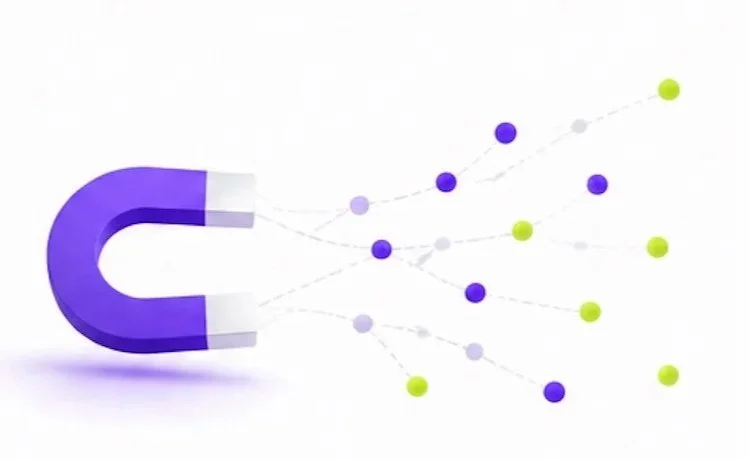
Attraction is the brand's gravitational pull. It's whether the right customers reach out to you before you reach out to them.
A brand with attraction shows up in conversations the company didn't start. It gets recommended by people who don't work for the company. It pops into mind when a prospect describes the problem you solve, even if they've never directly engaged with you.
A brand without attraction is the opposite. It's invisible until the sales team forces a meeting. Every prospect starts cold. Every conversation begins with "let me explain who we are." The sales team is doing the brand's job for it — and they're tired.
The difference between those two states isn't about the marketing budget. It's about whether the brand is built to be magnetic or built to be louder.
Five Signs Your Brand has an Attraction Problem
You don't always know you're in one. Attraction problems hide inside other symptoms. Here are the ones I see most often.
Your best-fit prospects don't know you exist. You can list five companies that should obviously be your customers, and four of them have never heard of you. That's not a sales-prospecting issue. That's a brand presence issue.
Customers describe you differently from how you describe yourself. You position the company one way. The market describes you another way. The gap between those two stories is exactly the gap in your attraction.
You compete on price more than you should. When the brand doesn't have pull, every deal becomes a price negotiation. When the brand does have pull, prospects come in already wanting to work with you, and price becomes one factor among many.
Every sale starts from scratch. If your sales team is explaining who the company is in the first ten minutes of every call, the brand isn't carrying its weight. A brand with attraction does that work before the call even starts.
Your audience is the audience you had three years ago. You haven't expanded into a new segment, geography, or buyer type, not because you couldn't serve them, but because the brand isn't designed to attract them. That's the ceiling.
If two or more of these sound familiar, you've got an attraction problem. And the good news is, it's solvable. The better news is, solving it usually unlocks growth that's been sitting on the table for years.
Attraction Isn’t About Being Louder
The instinct, when you realize the brand isn't pulling, is to make it louder. Bigger ad budget. More content. More events. More noise.
That almost never works. The market is already drowning in noise. Louder just means more expensive.
Attraction is about being magnetic instead. About building a brand that the right customers are drawn to, because it reflects something they care about, occupies a space they recognize, and shows up in a way that feels distinct from everyone else doing roughly the same thing.
That's not louder. That's clearer, sharper, and more confident in what the brand is for.
What to do This Week
Try this exercise. List the five companies you most want as customers next year. For each one, ask:
Has someone there ever heard of us?
If they have, would they describe us the way we'd describe ourselves?
If they haven't, why would they reach out to us specifically, not just to "a company in our category"?
If you can't answer those three questions confidently, you've identified your attraction gap. That's where the growth is hiding.
Next up: Engagement. Why attention isn't loyalty, and what brand power actually looks like.
Want to talk about what's standing between your brand and the customers you're not yet reaching? Book a growth conversation with Greg.
Greg Johnson is the co-founder of Orbital Socket, a brand strategy and design agency in Charlotte, NC. He and his wife, Carole, started the company eleven years ago with a mission to deliver world-class marketing, build an adventurous workplace, and create opportunities for young professionals of color in an industry that desperately needs more representation. If you’d like to get in touch with Greg, you can call him at 704.931.3529 or email him at greg@orbitasocket.com.

Your Brand Is a Growth Engine. Most Companies Just Forget to Turn It On.
Most founders and CEOs I sit with open the conversation the same way. "The product is solid. The sales team is working. The marketing is fine. But growth has slowed down, and I can't tell you exactly why."
I can usually tell them why. The brand never caught up.
The product matured. The market shifted. The company grew into something different from what it was three years ago. But the brand — the story, the positioning, the way the company shows up in the market — still sounds like the version that launched. And now it's quietly costing real growth.
This is the moment we built Orbital Socket for.
Brand isn't a cost center. It's a growth lever.
Here's the framing that changes everything.
Most companies treat their brand the way they treat office furniture. It's a thing you need, you spend on it once, you refresh it occasionally, and the rest of the time you ignore it. It lives in a folder called "Marketing," and it doesn't appear on any of the growth dashboards.
But the brands that compound, the ones that get easier to grow every quarter instead of harder, treat their brand the way they treat their best salesperson. It's an asset. It performs. You measure it. You invest in it because you can see what it returns.
When a brand is doing its job, the math of growth shifts. Attraction gets easier. Engagement gets stickier. Conversion gets faster. And the cost of acquiring the next customer goes down, not up.
That's not a theory. That's what brand-as-a-growth-engine actually means.
The Four-Lever Brand Actually Pulls
When we work with a founder on their brand as a growth system, we're moving four specific levers. None of them is abstract. All of them show up on a dashboard somewhere if you're paying attention.
Attraction. Whether the right customers reach toward you, or whether you have to chase them. Strong brands open doors before the sales team gets there. Weak brands force the sales team to start every conversation from scratch.
Engagement. Whether customers lean in or scroll past. Whether your audience is people who happen to buy from you, or people who actively choose to be in your world. The difference shows up in retention, referrals, and the cost of every email you send.
Conversion. Whether the brand, sales, and customer experience operate as one system or three disconnected ones. When they're aligned, the right customers self-select in, and the wrong ones opt out earlier. When they're not, the sales team is doing the brand's job for it.
Compound. Whether your brand gets stronger every quarter or weaker. Whether the work you did two years ago is still paying back, or whether you have to start over with every campaign.
Most companies are doing some version of all four, but they're doing them separately, with no shared framework, no shared owner, and no shared measurement. That's using the brand as a growth engine. That's using the brand as four uncoordinated things that all cost money.
What Changes When you Treat A Brand as A System
The first thing that changes is the conversation at the leadership level. When the brand is framed as a growth lever, the questions get different. Instead of "what's the new tagline," the question becomes "what does the brand need to do for the business this year, and how will we know if it's working?"
The second thing that changes is the budget conversation. Brand investment stops looking like a cost and starts looking like a multiplier on every other dollar you're already spending. A strong brand makes paid media cheaper. A strong brand shortens sales cycles. A strong brand makes customer success less expensive because customers come in better aligned.
The third thing that changes is the timeline. Most companies treat brand work as a project. A refresh. A campaign. Something you do, then ship, then forget. Brand as a growth engine is the opposite. It's ongoing. It's measured. It compounds, and it stops compounding the minute you stop tending it.
Where to Start
If you're a founder CEO reading this, here's the question I'd ask first.
When was the last time you looked at your brand the way you look at your other growth levers? With a real measurement framework, and a real conversation about whether it's pulling its weight?
If the answer is "not recently" or "never," that's the gap. And it's probably costing more than you think.
Next Post: Attraction. Why the right customers don't know you exist, and what to do about it?
Want to talk through what brand as a growth engine could mean for your company? Book a growth conversation with Greg Johnson.
Greg Johnson is the co-founder of Orbital Socket, a brand strategy and design agency in Charlotte, NC. He and his wife, Carole, started the company eleven years ago with a mission to deliver world-class marketing, build an adventurous workplace, and create opportunities for young professionals of color in an industry that desperately needs more representation. If you’d like to get in touch with Greg, you can call him at 704.931.3529 or email him at greg@orbitasocket.com.

Travel Marketing Is Fun… Until You Realize Everyone’s Saying the Same Thing
Travel and tourism should be one of the easiest industries to market. I mean, you’re literally selling beaches, mountains, once-in-a-lifetime experiences, and food that makes people rethink their entire life back home. It’s not exactly a tough product. And yet…

The New Marketing Revolution
As founder of Orbitalsocket.com, I've witnessed firsthand how artificial intelligence has transformed the marketing landscape.

10 Years of Orbital Socket: A Journey of Purpose, Partnership, and Possibility
A decade ago, my wife Carole and I started Orbital Socket with three clear commitments.

Characteristics of Orbital Socket
Orbital Socket is more than just an advertising agency. We partner with your organization to help bring a distinctive voice to your brand.

The Human Exchange of Ideas
One of our core beliefs at Orbital Socket is The Human Exchange of Ideas: the phenomenon whereby ideas move from person to person and group to group.

What is the Multicultural Consumer?
The term “multicultural consumers” was defined by the US Census Bureau to encompass Black, Latino, American-Indian, Asian, and Pacific Islander populations.

What is Captivation?
When you think about businesses marketing to an audience, the words engagement and relevance always come to mind.
How We Made An Award-Winning Commercial During The Pandemic
2020 was a year of social and political unrest.

Why Branding Matters?
Because there are a WHOLE lot of brands trying to do the same thing you are trying to do. . . sell something to consumers.

How To Win In Today's Complex Marketing Environment
In today's world, people live on the Internet. According to Statista, the average American spends about eight hours a day consuming digital media.

OS Speaks: The Stories We Tell
The way we view and process entertainment, advertising, and general information has changed so much over just the last 10-15 years.

Why Creativity Still Matters In Advertising
In an age of digital transformation and digital transportation of ideas, creativity still matters.